
QUALITY
The Quality section of FactoryUniC offers a collection of hands-on PDF and PPT resources designed to help quality leaders and teams in industrial environments safeguard excellence at every step. Each tool and template is built for real-world use, giving your quality team the clarity and confidence they need to deliver consistently outstanding results.
Quality
Quality Definition
QUALITY | QUALITY DEFINITION:A Terrain of Diverse Interpretations
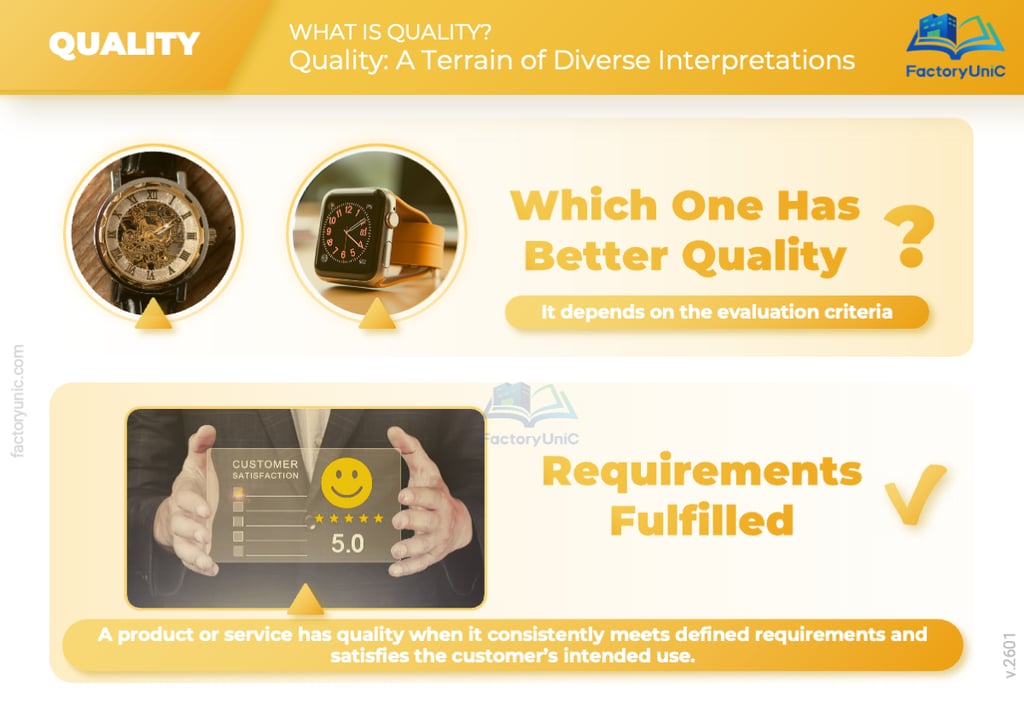
Everyone talks about “quality”. Customers demand it. Companies promote it. Teams measure it.
Yet, when we listen carefully, we realize something interesting: people don’t all mean the same thing when they say “this product has quality.”
Consider two very different products: a luxury Swiss mechanical watch and a mass-produced digital watch. The Swiss mechanical watch is considered high quality because of its craftsmanship, precision, premium materials, and long tradition, with an emphasis on durability and meticulous assembly. The digital watch is considered high quality for its accuracy, robustness, ease of use, low failure rates, and consistent performance at scale. So, which one has better quality? If we judge quality by craftsmanship and complexity, the Swiss watch clearly stands out. If we judge it by robustness, affordability, and consistency in large-scale assembly, the digital watch may actually outperform it.
This leads to a fundamental question: how can we define, in practical terms, whether a product truly has quality?
This is where standards such as ISO 9001 become useful. Rather than treating quality as a vague or subjective idea, ISO 9001 defines it as the degree to which a product meets defined requirements. In simple terms, a product can be considered “high quality” if it meets customer expectations, complies with legal and regulatory requirements, follows its intended design and internal specifications, and performs consistently over time. Nothing more. Nothing less.
📫 Sourcing from China and quality matters to you? Let’s talk. contact@factoryunic.com
Quality
Quality Principles
QUALITY | QUALITY PRINCIPLES: A Commitment at Every Step, Not Just a Final Check
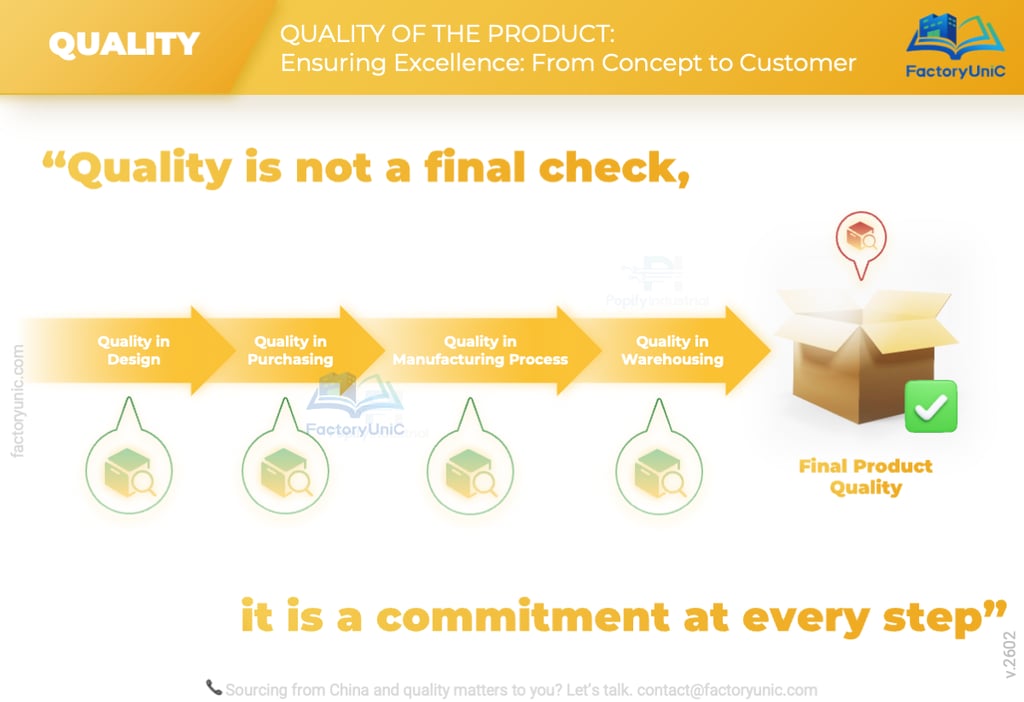
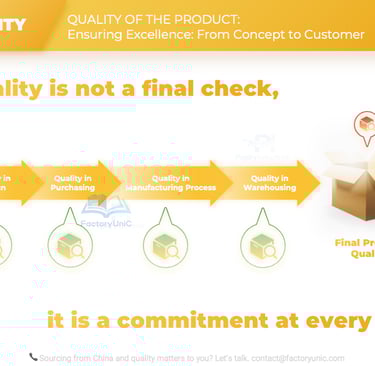
In a world where customer expectations are higher than ever, ensuring high-quality products and services is no longer an option, it’s a necessity. Yet, many organizations still perceive quality as a final inspection step, rather than an integrated, proactive approach throughout the entire process. The reality is that “quality is not a final check; it is a commitment at every step”.
Quality in Design
Quality is first shaped during the “design phase”. Every specification, material selection, and engineering decision contributes to the final outcome. By incorporating quality-focused methodologies such as Design For Manufacturing and Assembly and Disassembly (DFMAD), Design For Six Sigma (DFSS) and Design Failure Mode and Effects Analysis (DFMEA), companies can prevent defects before they occur rather than fixing them later.
Quality in Purchasing
A product or service is only as good as the materials, components, and services that go into it. Supplier management is crucial in maintaining high standards. Establishing stringent vendor qualification processes, setting clear quality expectations, and implementing Part Homologation protocols help ensure that only the best inputs are used.
Quality in Manufacturing Process
In both manufacturing and service industries, quality must be an inherent part of process execution. This requires integrating quality controls into daily operations through real-time monitoring systems, Statistical Process Control (SPC), and continuous improvement methodologies such as Lean and Six Sigma. Process Failure Mode and Effects Analysis (PFMEA) helps anticipate and mitigate risks before production starts, and Poka-Yoke (error-proofing mechanisms) and automation can further prevent defects before they impact the final product.
Quality in Warehousing & Logistics
Storage, handling, and distribution play a critical role in preserving quality. Poor warehousing conditions or mishandling during transportation can result in damaged goods and dissatisfied customers. Implementing inventory management best practices, optimizing storage conditions (temperature, humidity control), and ensuring proper packaging can significantly reduce quality issues.
Quality is not just an afterthought—it is a mindset, a culture, and a systematic approach that must be embedded in every phase of a product’s lifecycle. From initial concept to final delivery, a commitment to quality ensures better products, stronger customer relationships, and long-term success.
📫 Sourcing from China and quality matters to you? Let’s talk. contact@factoryunic.com
Quality Department
Department's Key Roles
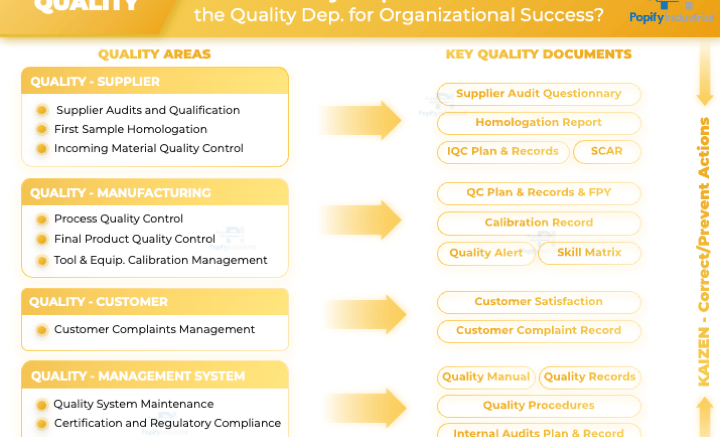
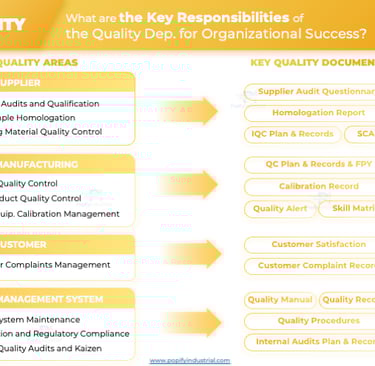
QUALITY | DEPARTMENT'S KEY ROLES
Essential Responsibilities of the Quality Department in Pursuing Organizational Success
Introduction
Quality is not just a benchmark; it is a fundamental commitment to excellence that ensures customer satisfaction and long-term business success. The Quality Dept. serves as the guardian of this commitment, implementing systems and processes that guarantee every product meets expectations.
1.- Supplier Quality: The First Line of Defense.
The quality of a final product begins long before manufacturing—it starts...
Please download the attached PDF or PPT to access the complete content.
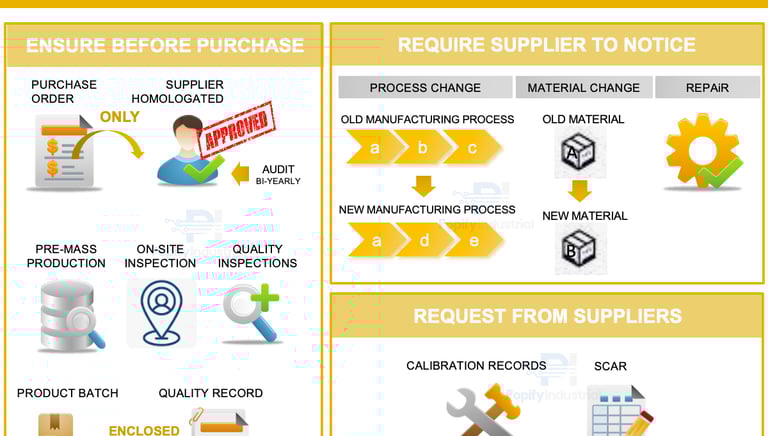
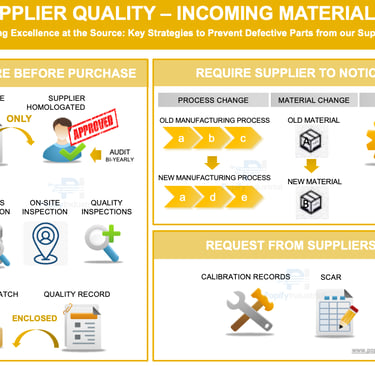
QUALITY SUPPLIER | KEY ROLES
Securing Excellence at the Source: Key Strategies to Prevent Defective Parts from Entering Our Supply Chain
In the realm of quality assurance, preventing defective parts from reaching our company is not just a preference; it's an absolute necessity. The following guidelines elucidate crucial steps to safeguard our production from supplier-related defects.
1. Supplier Homologation.
Homologate supplier to both the product itself (Product Homologation) and the manufacturing process responsible for its creation (Process Homologation).
Conduct bi-annual supplier process audits to ensure ongoing compliance and process capability.
Only place purchasing orders (POs) with suppliers who have received approval...
Please download the attached PDF or PPT to access the complete content.
Quality Supplier
Key Roles
Quality Supplier
Control Dashboard
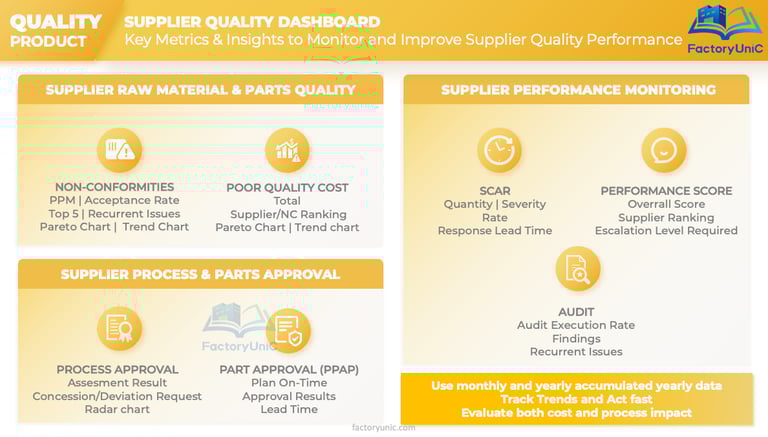
Quality Supplier | CONTROL Dashboard
A Strategic Dashboard to Control the Quality Enters Our Factory – and Protect What Leaves It
Overview
If you build products by assembling parts — quality starts long before assembly begins. It starts with what we receive, and more precisely, who we receive it from. Suppliers are an extension of our factory. If they underperform, it becomes our problem. If their parts fail, we take the hit — in rework, in downtime, and in customer complaints. That’s why this Supplier Quality Dashboard is not just another report. It is our early warning system, our accountability map, and our guide to better decisions.
1. SUPPLIER INCOMING PARTS & MATERIALS
Monitor where risk is increasing, where improvements are working, and where...
Please download the attached PDF or PPT to access the complete content.
Quallity Supplier
Supplier Approval (Homologation)
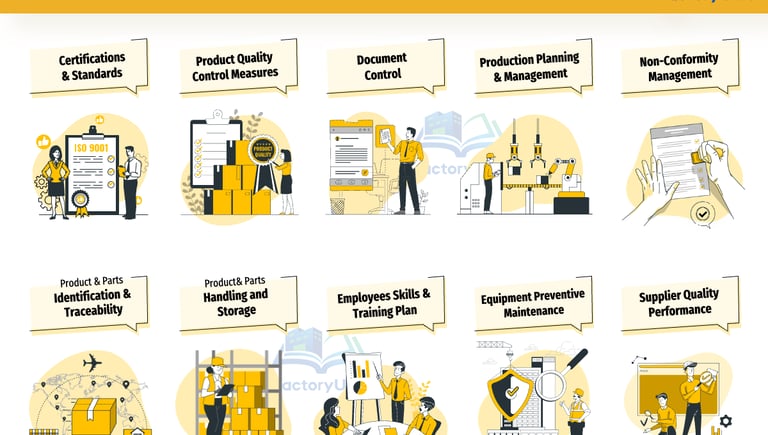
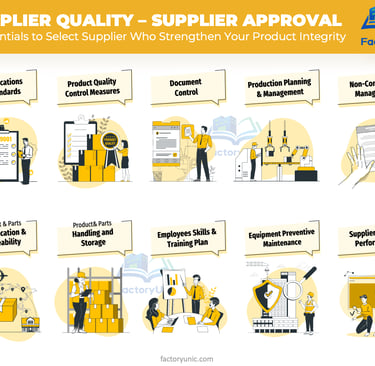
QUALITY SUPPLIER | SUPPLIER APPROVAL
Supplier Approval - The First Line of Defense for Quality Excellence
“Suppliers are not external resources — they are co-guardians of quality”
In the quality management, supplier approval (also known as “homologation”) plays a pivotal role in safeguarding product excellence
When considering the integration of a supplier into your network, several key factors demand meticulous evaluation due the suppliers are foundational pillar of our supply chain. These factors not only influence product quality but also determine the integrity and reliability of our supply chain. Here, we delve into the essential facets to contemplate during the supplier homologation process:
1. Certifications and Standards: Adherence to internationally recognized standards, such as ISO 9001 for Quality Management Systems, is a hallmark of commitment to quality excellence. Demand concrete evidence of compliance, such as certifications ...
Please download the attached PDF or PPT to access the complete content.
Quality Supplier
Supplier Quality Agreement
Quality Supplier | SUPPLIER Agreement
Establish clear quality agreements with suppliers, outlining the specific quality requirements and expectations to minimize risks. Key points to include in a supplier agreement:
Quality Records and Certificates: Require the supplier to provide detailed quality records and certificates for each batch sent, including quality checks, test results, inspections, and applied standards and Certificates such as CE Certification document. This ensures accountability, facilitates audits, and supports traceability.
Quality Assurance and Penalties: Establish a minimum level of quality that products must meet, with financial penalties or other corrective measures in case of non-compliance.
...
Please download the attached PDF or PPT to access the complete content.
Quality Supplier
Part Homologation Report Template
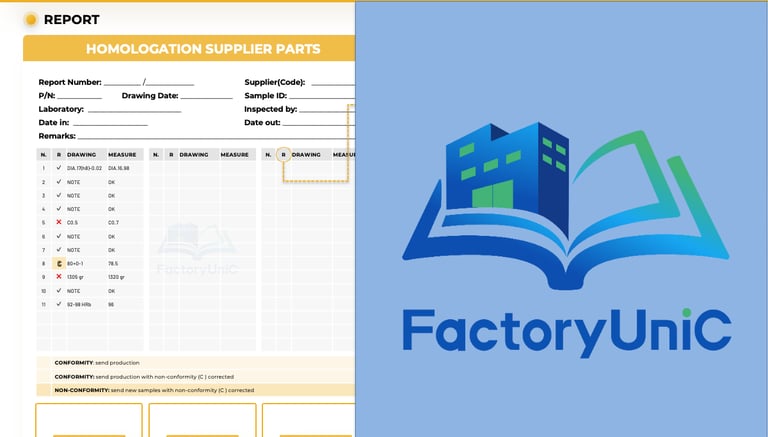
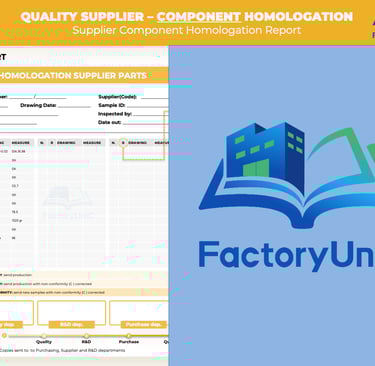
QUALITY SUPPLIER | Homologation Report Template
This document provides an example template for the verification and homologation of supplier components.
Such a template ensures that each piece meets precise technical specifications, maintaining the highest standards of reliability and performance.
Please download the attached PDF or PPT to access the complete content.
Quality Plant
Control Dashboard
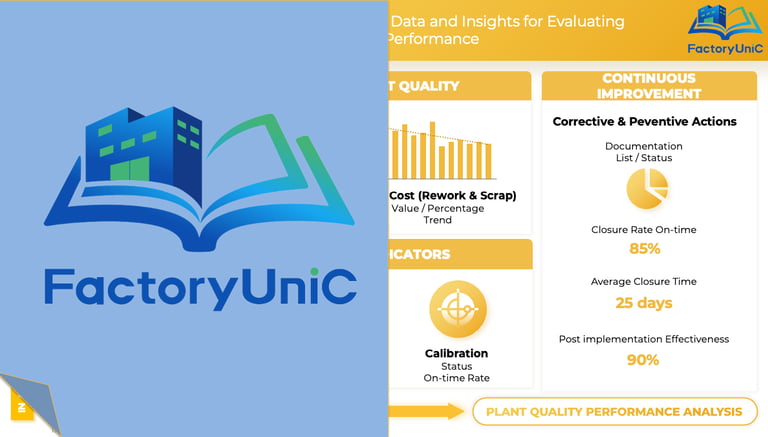
QUALITY PLANT | CONTROL DASHBOARD
Key Quality Metrics for Evaluating Plant Performance
In every manufacturing plant—whether you're assembling precision gearboxes, implantable medical sensors, or industrial control panels—quality isn’t just a department; it’s the foundation of trust, performance, and profitability. But quality doesn't improve by chance. It must be quantified, tracked, and continuously improved through disciplined data-driven action. Below are the essential indicators and information that every quality team member should know, understand, and monitor to drive excellence on the shop floor.
1.- In-Process & Final Product Quality Metrics
First Pass Yield (FPY). The percentage of units that pass all inspections the first time without rework...
Please download the attached PDF or PPT to access the complete content.
Quality Plant
Quality Alert
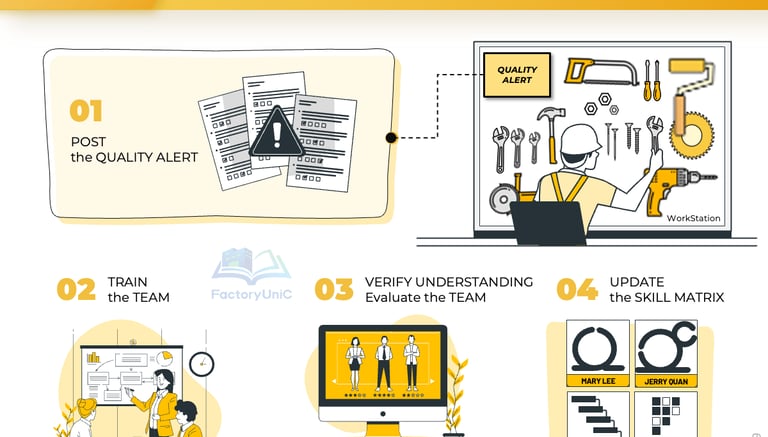
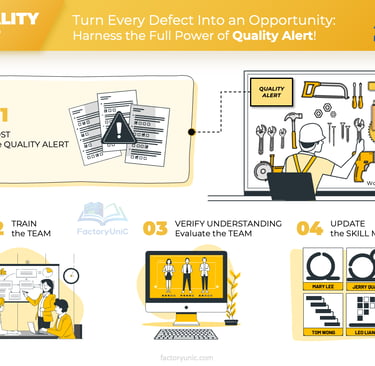
QUALITY PLANT | QUALITY ALERT
Maximize Product Quality: Uncover the Power of Process Quality Alerts!
What Is a Process Quality Alert?
Process Quality Alerts are formal documents used to notify employees about identified quality issues that may affect the products they produce.
A Process Quality Alert is a formal communication tool used on the shop floor to:
Notify teams of a quality issue affecting product integrity.
Raise immediate awareness.
Drive preventive and corrective action.
Foster a shared culture of accountability and learning.
...
Please download the attached PDF or PPT to access the complete content.
Quality Control
Visual Quality Controls
QUALITY CONTROL | VISUAL INSPECTION
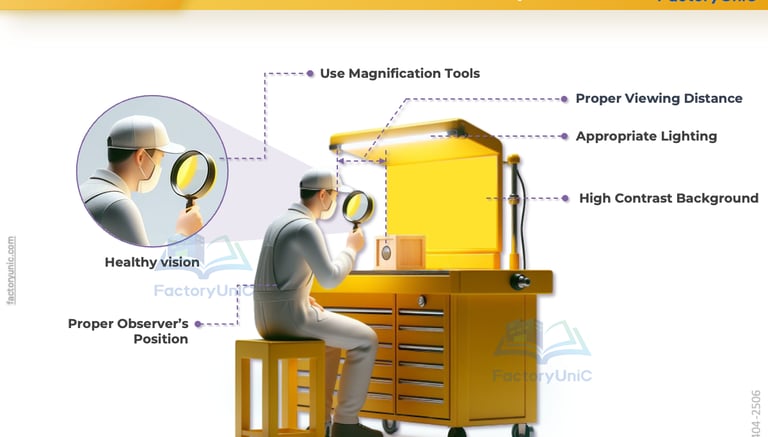
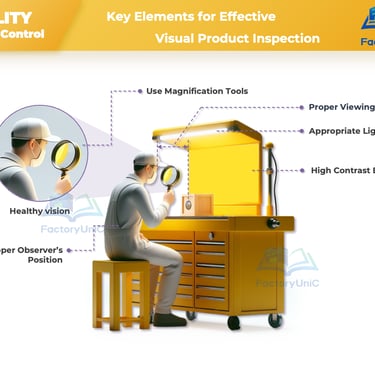
WHAT KEY ELEMENTS SHOULD TO TAKE INTO CONSIDERATION FOR A SUPERIOR VISUAL PRODUCT INSPECTION?
In the realm of quality assurance, visual inspection remains a cornerstone. However, the effectiveness of this inspection hinges on several critical factors. Let’s delve into the essential elements that ensure precision and accuracy in visual product inspections.
1️⃣ Optimal Lighting Conditions 💡
Lighting can make or break an inspection process. Adequate illumination is vital, but it's a balancing act - too dim, and you miss the subtleties; too bright, and you're blinded by glare. The goal is clear, consistent lighting that accentuates product details without creating distracting shadows or glare. Adjustable lamps are recommended...
Please download the attached PDF or PPT to access the complete content.
Quality Plant
Process Capability Index (Cpk)
QUALITY PLANT | PROCESS CAPABILITY INDEX (CPK)
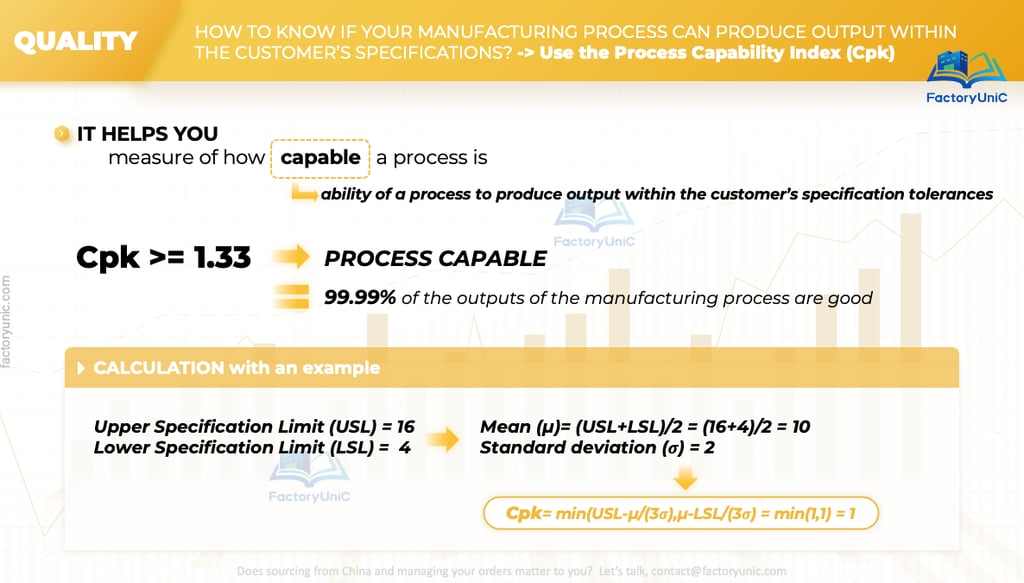
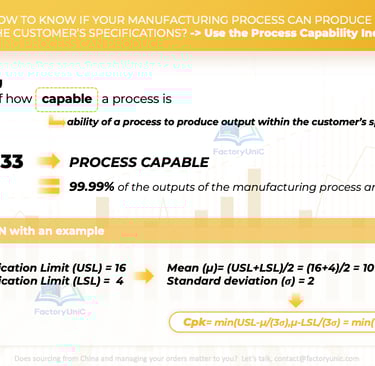
Cpk helps you measure how capable a manufacturing process is.
It represents the ability of a process to produce output within the customer’s specification limits (the customer’s tolerance range).
In practical terms, Cpk tells you:
How close your process is to the target value
How consistent your results are around the average
Whether your variation fits safely inside the tolerance window
The higher the Cpk value, the more reliable and robust the process.
How to Interpret Cpk
Cpk ≥ 1.33 The process is considered capable. It meets the specification limits with an acceptable safety margin.
Cpk < 1.33 The process is not sufficiently capable. Either the variation is too wide compared to the specification limits, or the process average is shifted away from the target.
Important Industrial Insight
Cpk does not only measure compliance, it measures risk.
A low Cpk means:
Higher probability of defects
Increased rework and scrap
Greater warranty exposure
Higher operational instability
📫 Sourcing from China and quality matters to you? Let’s talk. contact@factoryunic.com
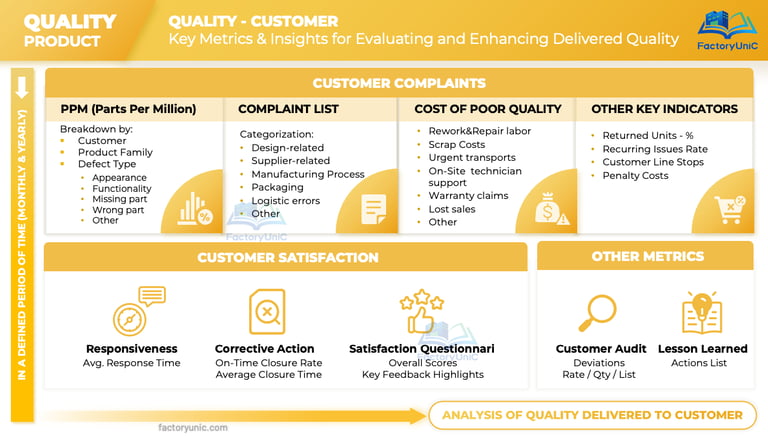
QUALITY CUSTOMER | CONTROL DASHBOARD
In manufacturing, quality delivered to the customer is more than a result, it's a promise. But how do we measure and improve that promise consistently? Through key performance indicators (KPIs).
1. Customer Complaints.
Every complaint is an opportunity—an insight into how we can do better.
1.1. PPM (Parts Per Million)
Formula: ...
Example: ...
Interpretation: ...
Others: It can be broken down by customer, product family, and defect...
Please download the attached PDF or PPT to access the complete content.
Quality Customer
Control Dashboard
Quality System
Contract Review
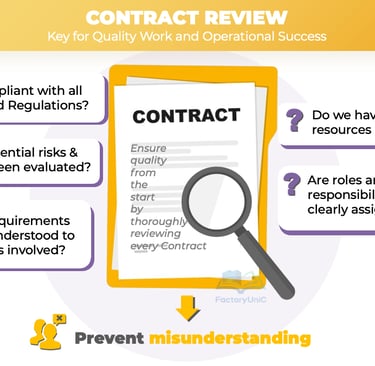
quality system | Contract Review
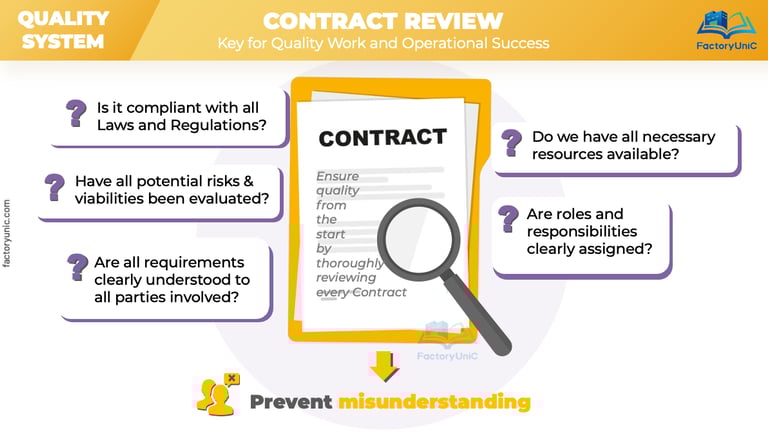
What is a Contract Review?
A Contract Review is the process of carefully checking agreements between your company and clients or suppliers to ensure that all requirements, expectations, and standards are clearly understood and achievable before starting any production or service.
Why is Contract Review Important?
Conducting a thorough Contract Review is vital because:
It prevents misunderstandings and disputes.
It ensures customer satisfaction...
Please download the attached PDF or PPT to access the complete content.
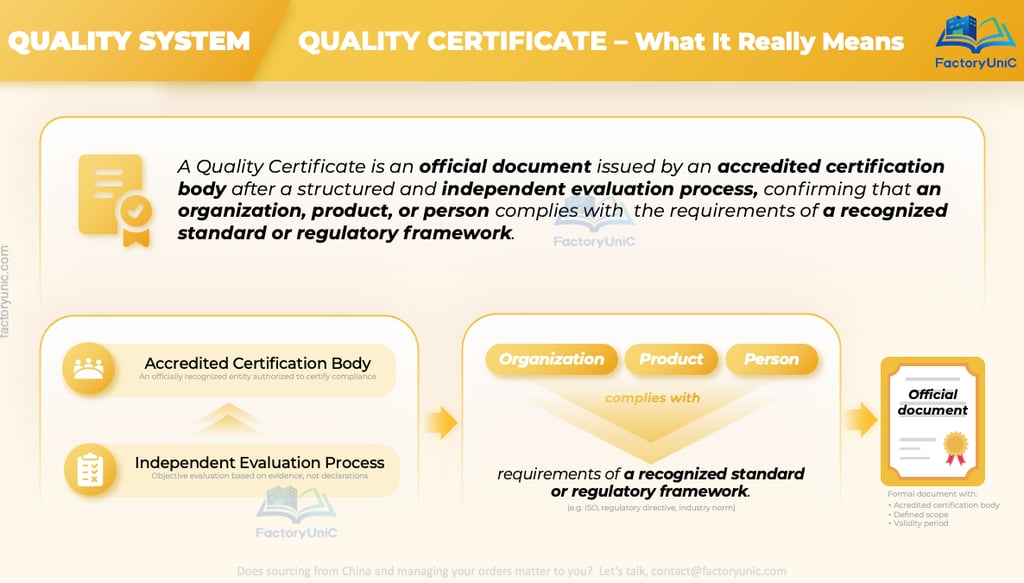

Quality System
Quality Certification - What it really means
QUALITY SYSTEM | QUALITY CERTIFICATE
What Is a Quality Certificate?
A quality certificate is an official document issued by an accredited certification body after a structured and independent evaluation process, confirming that an organization, product, or person complies with the requirements of a recognized standard or regulatory framework (such as ISO 9001 or others).
Now let’s break this down carefully, because every word in this definition has weight.
“Official Document”
This is not a self-declaration. It is not something the company writes about itself. It is a formal recognition issued by a third party that has the authority and competence to evaluate management systems.
“Accredited Certification Body”
This is a key element. Not every company can issue a valid certificate. The certification body itself must be accredited by a national or international accreditation authority. This creates a chain of trust: Accreditation Body → Certification Body → Manufacturing Company → Customer
Why is this important? Because accreditation ensures that the evaluation is not subjective, the evaluation follows strict evaluation protocols, auditors are trained, qualified, and follow internationally recognized procedures.
Main Certification Bodies: TÜV Rheinland, TÜV SÜD, TÜV Nord, Bureau Veritas, SGS, DNV, Intertek, Applus+.
“Independent Evaluation Process”
The certificate is the result of a detailed evaluation process. It follows a defined methodology that may include: Document review, On-site audits, Technical testing, Risk assessments, Interviews, Performance verification and Surveillance audits over time. All questions must be supported by objective evidence.
The word “independent” is critical. The evaluation must be impartial. The certification body cannot have conflicts of interest with the company being evaluated.
“Organization, Product, or Person”
Certification can apply to different subjects:
Organization. The management system is evaluated. Example: ISO 9001 certifies that the company operates under a structured quality management system.
Product. The product is evaluated against technical and regulatory requirements. Example: CE marking confirms compliance with applicable European directives.
Person. The competence of an individual is assessed. Example: Certified quality auditor, welding inspector, or safety specialist. This ensures that the individual possesses verified knowledge and skills.
“Recognized Standard or Regulatory Framework”
Certification is always based on something concrete, a defined reference. This may include: International standards (ISO), European regulations, Sector-specific standards (automotive, aerospace, food) and National regulations
The standard defines the rules. The certification confirms compliance with those rules. Without a defined reference, certification has no meaning.
Why Is Certification Important?
Certification is usually voluntary, but strategically powerful. In competitive industrial markets, certification creates differentiation. It provides:
Assurance of structured processes
Increased customer confidence
Market credibility
Competitive advantage
Easier access to international markets
Improved internal discipline and process stability
Important to Understand
A quality certificate does not guarantee perfection. It guarantees that compliance has been evaluated objectively against a recognized framework.
To take in consideration
Before accepting any certificate from a supplier, always check:
Who issued it. Is it a recognized and independent certification body?
What exact scope is covered. Does the certificate actually include the product or process you are buying?
Which version of the standard applies? An obsolete version? If it is still valid, expired certificates are more common than you think.
📫 Sourcing from China and quality matters to you? Let’s talk. contact@factoryunic.com